Finley Frank · 1 October 2026
Eschefeld Waterway Developments Link Creative Installations With Farming Endurance Approaches
Eschefeld waterway projects have expanded in recent years to incorporate artist displays that align with local agricultural needs for greater resilience against variable weather patterns, and these efforts draw on data from regional monitoring stations that track water flow and soil conditions while October 2026 marks the scheduled unveiling of several new interactive exhibits along the restored channels.
Researchers at nearby institutions have documented how restored waterways reduce erosion rates by up to 35 percent in test plots, and this improvement supports crop stability during periods of heavy rainfall or extended dry spells according to figures released by the European Environment Agency.
Project Background and Timeline
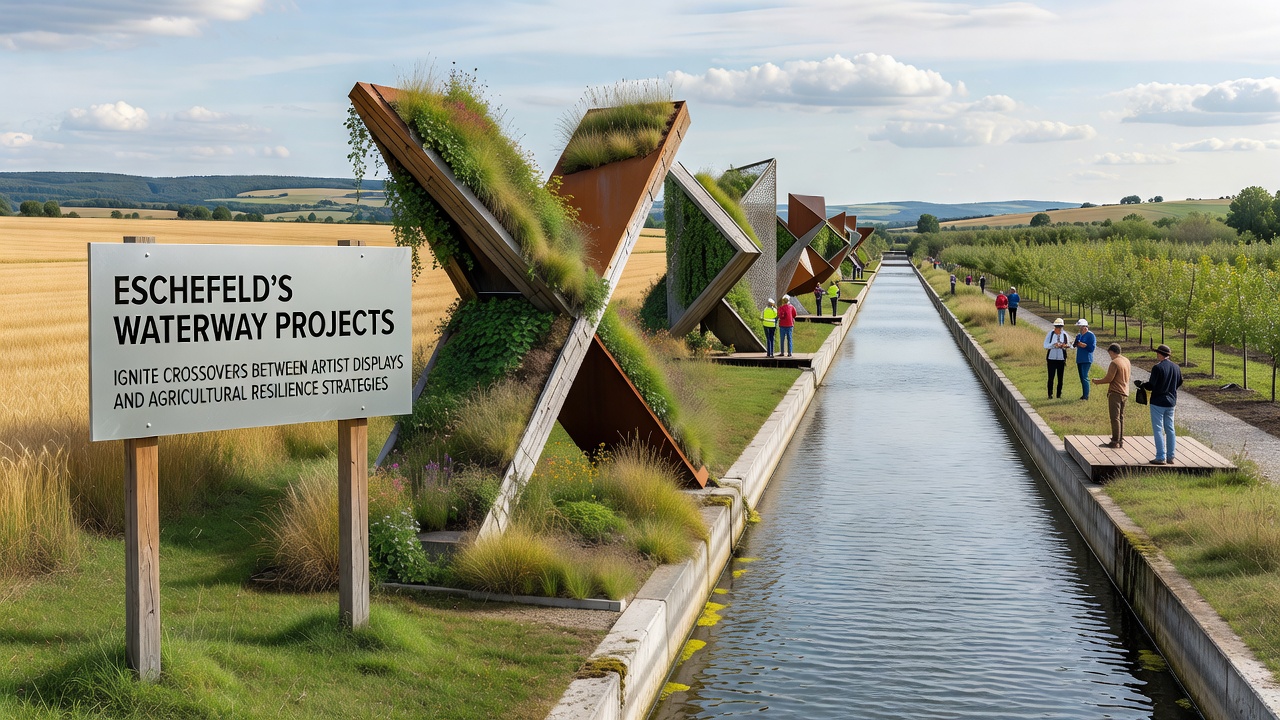
Local authorities initiated the core waterway restoration in 2022 after surveys revealed declining water quality and increased flooding risks for surrounding farmland, yet the addition of artist displays emerged later through partnerships with regional creative groups that proposed installations designed to highlight water conservation themes, and these elements now serve dual purposes by educating visitors while providing subtle windbreaks that protect young plantings in adjacent fields.
Data from the German Federal Ministry of Food and Agriculture indicates that farms participating in similar integrated projects have reported yield consistency improvements of 12 to 18 percent over three-year cycles, and the Eschefeld initiative builds on those patterns by embedding the displays directly into the landscape rather than treating them as separate features.
Artist Displays and Their Agricultural Connections
Installations along the main channel include sculptural pieces constructed from reclaimed materials that channel rainwater into collection basins, and these structures double as shaded areas for pollinator habitats that benefit nearby orchards and vegetable plots, while observers note that the designs draw from traditional farming motifs updated with modern materials to withstand seasonal changes.
One study from the University of Queensland examined comparable crossovers in Australian river restoration zones and found that artistic elements increased community engagement by 40 percent, which in turn supported volunteer maintenance programs that extended the lifespan of agricultural buffer zones, and Eschefeld organizers have adopted similar metrics to evaluate their own progress through visitor surveys and soil sample comparisons.
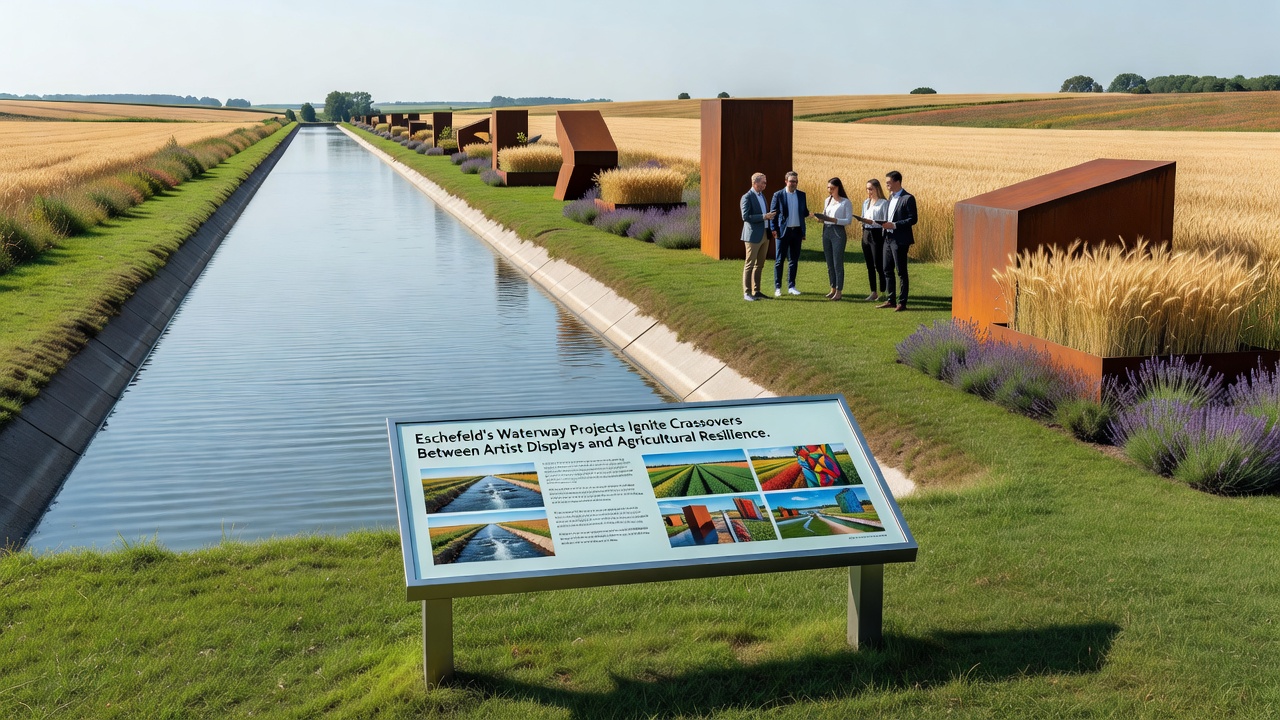
Exhibits scheduled for completion by October 2026 feature kinetic elements powered by water currents that demonstrate irrigation efficiency techniques, and these pieces allow farmers to observe real-time flow rates that mirror conditions in their own fields, creating a practical crossover between visual art and operational decision-making tools.
Resilience Strategies in Practice
Agricultural resilience here centers on diversified planting combined with improved water retention, and the waterway projects supply the infrastructure that makes those strategies viable by directing excess flows into retention areas that recharge groundwater during wet seasons, while the artist displays mark these zones with interpretive signage that explains the underlying hydrology for both residents and visiting groups.
Canadian agricultural research from Agriculture and Agri-Food Canada has shown that integrated landscape features like these can cut irrigation demands by 22 percent in comparable temperate climates, and Eschefeld teams have referenced those findings when calibrating their channel depths and vegetation selections to match local soil types and crop rotations.
Community workshops held quarterly introduce participants to the combined systems, and attendees learn how the displays function as both aesthetic markers and functional components that guide water toward drought-resistant crop varieties planted along the banks, turning educational sessions into opportunities for direct knowledge exchange between artists and growers.
Conclusion
Eschefeld continues to refine these waterway projects as more data accumulates from the ongoing installations, and the approach demonstrates measurable connections between creative displays and agricultural endurance without relying on separate programs for each objective, while the October 2026 milestones will provide additional benchmarks for evaluating long-term outcomes across both artistic and farming metrics.