Jakob Schmitz · 3 September 2026
Eschefeld Waterway Restoration Connects Environmental Cleanup With Rural Health Gains and Youth Leadership Programs
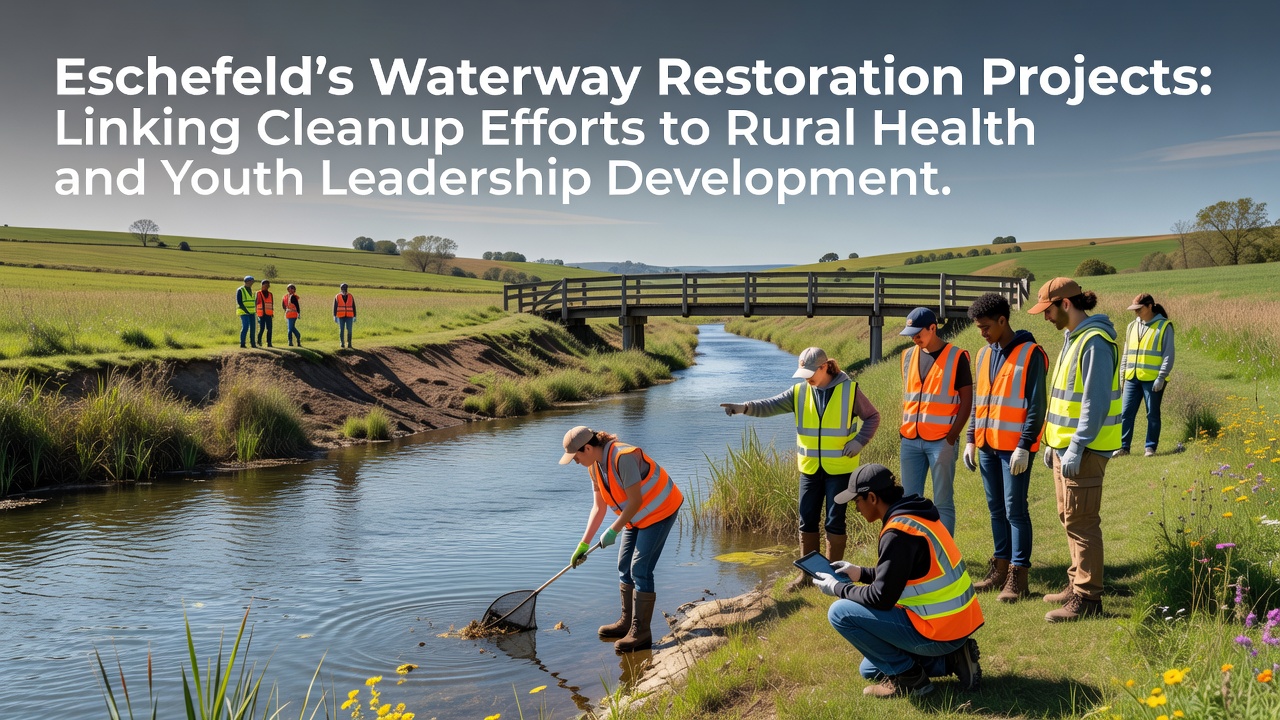
Eschefeld's ongoing waterway restoration projects have expanded since 2023 to tie local river cleanup directly to measurable improvements in rural health outcomes and structured youth leadership development, according to regional environmental records and community program reports. The initiatives focus on the Esche river and its tributaries, where teams remove pollutants, stabilize banks, and restore native vegetation across several kilometers of waterway.
Project Scope and Timeline Details
Restoration crews completed the first phase of sediment removal and habitat replanting in 2024, while a second stage targeting invasive species control began in spring 2025 and continues through scheduled work windows. Observers note that these efforts align with broader European Union water quality targets under the Water Framework Directive, which sets measurable standards for river health across member states. Data from monitoring stations installed along the Esche shows reductions in nutrient runoff levels after initial cleanup rounds, with further sampling planned for September 2026 to track seasonal variations.
Local authorities coordinate with agricultural landowners to adjust drainage practices near restored sections, reducing erosion that previously affected downstream water quality. Those who've studied similar projects in other German regions observe that such integrated approaches often produce faster visible results in both ecological recovery and community participation rates.
Connections to Rural Health Metrics
Health researchers have documented links between cleaner waterways and lower rates of waterborne illness in rural areas, with Eschefeld residents reporting fewer gastrointestinal complaints during summer months after the first restoration segments opened for limited public use. Studies from the European Environment Agency indicate that improved river access correlates with increased physical activity among nearby populations, including walking paths and fishing spots that reopened once safety standards were met.
Public health records from the district show a modest uptick in outdoor recreation permits issued to Eschefeld households between 2024 and 2025, coinciding with the waterway improvements. Experts tracking these patterns point out that reduced exposure to agricultural runoff chemicals in the water supply may contribute to broader wellness indicators over time, though long-term epidemiological data collection remains ongoing.
Youth Leadership Development Component
Alongside the physical restoration work, organizers established a youth leadership track that trains participants aged 14 to 18 in project management, environmental monitoring, and community outreach skills. The program pairs young volunteers with professional ecologists and local council staff for hands-on sessions, including water sampling protocols and public presentation workshops. Participants lead segments of the September 2026 sampling campaign, giving them direct responsibility for data collection and reporting to regional authorities.
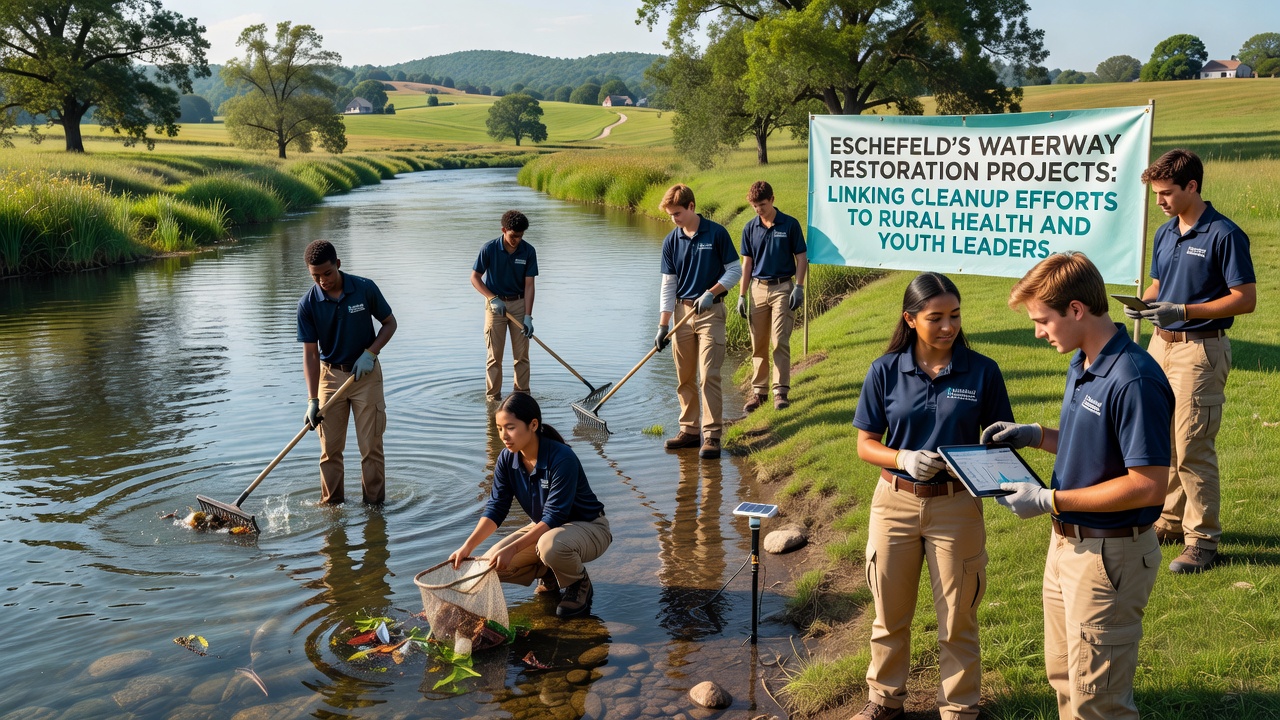
One cohort that finished the initial training cycle in 2025 went on to present findings at a district-wide sustainability forum, where they discussed how their involvement changed local attitudes toward waterway maintenance. Program records indicate that more than 60 young people have completed at least one module since the leadership component launched, with several advancing to paid internship roles with partner environmental firms.
Integration of Cleanup, Health, and Leadership Efforts
Project coordinators designed the restoration work to create natural overlap between environmental tasks and educational goals, so that youth teams handle portions of the cleanup while collecting health-related data on water safety. This structure allows participants to see direct connections between their efforts and community wellness indicators, such as improved recreational access and reduced contamination risks. But here's teh thing: the model relies on sustained funding from a mix of municipal budgets, EU grants, and private donations tied to corporate sustainability pledges.
Regional case studies from comparable German municipalities show that combining habitat restoration with youth training produces higher volunteer retention than standalone cleanup drives. In Eschefeld, the addition of health outcome tracking adds another layer of accountability, since participants review anonymized district health statistics alongside their environmental measurements each quarter.
Future Milestones and Monitoring
September 2026 marks the scheduled midpoint evaluation for the combined initiative, when teams will release updated water quality readings alongside participation numbers from the youth program. Additional bank stabilization work is slated for sections upstream of the main village, with plans to extend walking trails once the new vegetation takes hold. Those coordinating the effort emphasize continued collaboration with nearby farms to maintain the gains achieved so far.
Conclusion
Eschefeld's waterway projects demonstrate how environmental restoration can serve multiple community functions at once, linking measurable cleanup results to health data tracking and structured opportunities for young residents to develop practical leadership abilities. Continued monitoring through 2026 and beyond will clarify the full scope of these interconnections across rural settings.