Ben Bennett · 17 September 2026
Eschefeld's Annual Art Exhibition Connects Farmer Climate Initiatives with Small Business Development Strategies
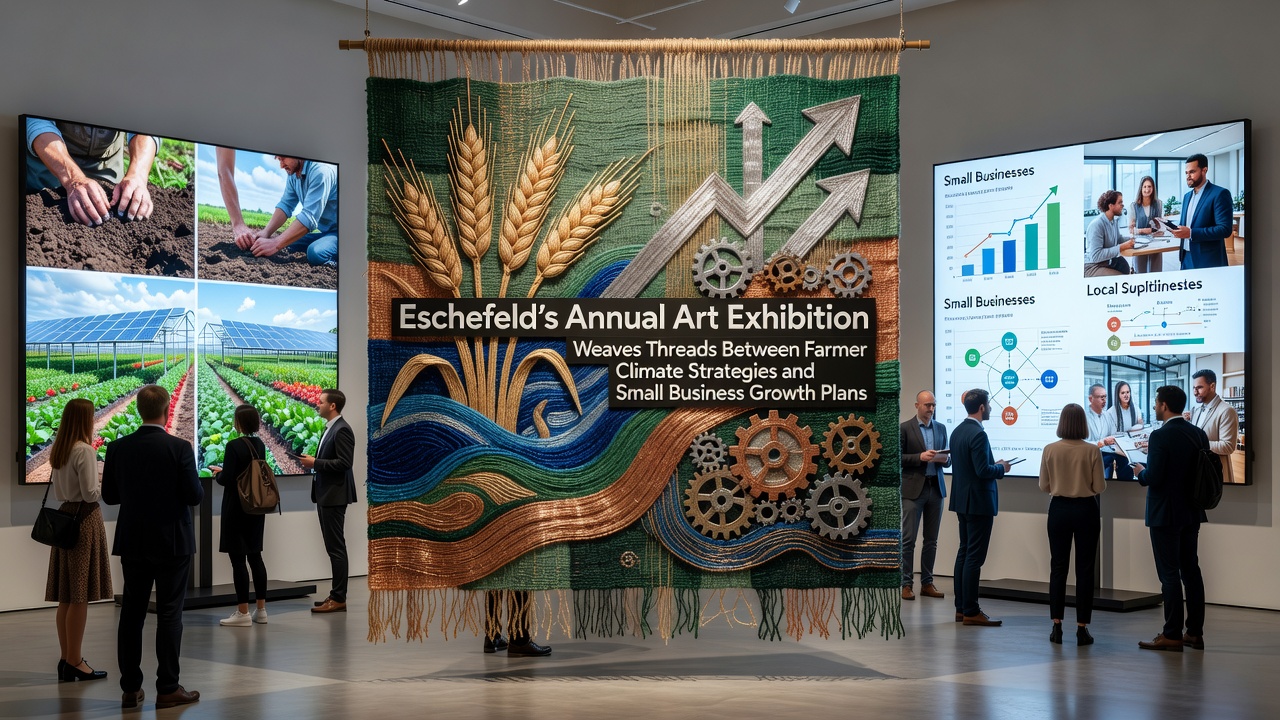
Eschefeld's annual art exhibition opens each September and runs through the first week of October, with the 2026 edition scheduled to highlight intersections between agricultural climate adaptation and rural enterprise expansion. Local organizers coordinate with regional farmers and business owners to curate works that depict specific practices such as cover cropping, water-efficient irrigation, and diversified income streams through agritourism ventures.
Exhibits include sculptures constructed from recycled farm equipment alongside paintings that map supply chain shifts for small retailers adapting to changing weather patterns. Data from the European Environment Agency indicates that German agricultural regions have seen a 12 percent rise in extreme weather events since 2015, prompting many operations to integrate climate measures directly into daily planning.
Historical Context and Exhibition Evolution
The exhibition began in 2012 as a modest showcase of local paintings yet expanded after 2018 when organizers incorporated thematic tracks on environmental resilience. Attendance figures climbed from roughly 800 visitors in the first year to more than 4,200 in 2025, according to records maintained by the Eschefeld Cultural Association. Works now draw from multiple media including photography documenting soil carbon sequestration trials and interactive installations that simulate business revenue modeling under variable climate scenarios.
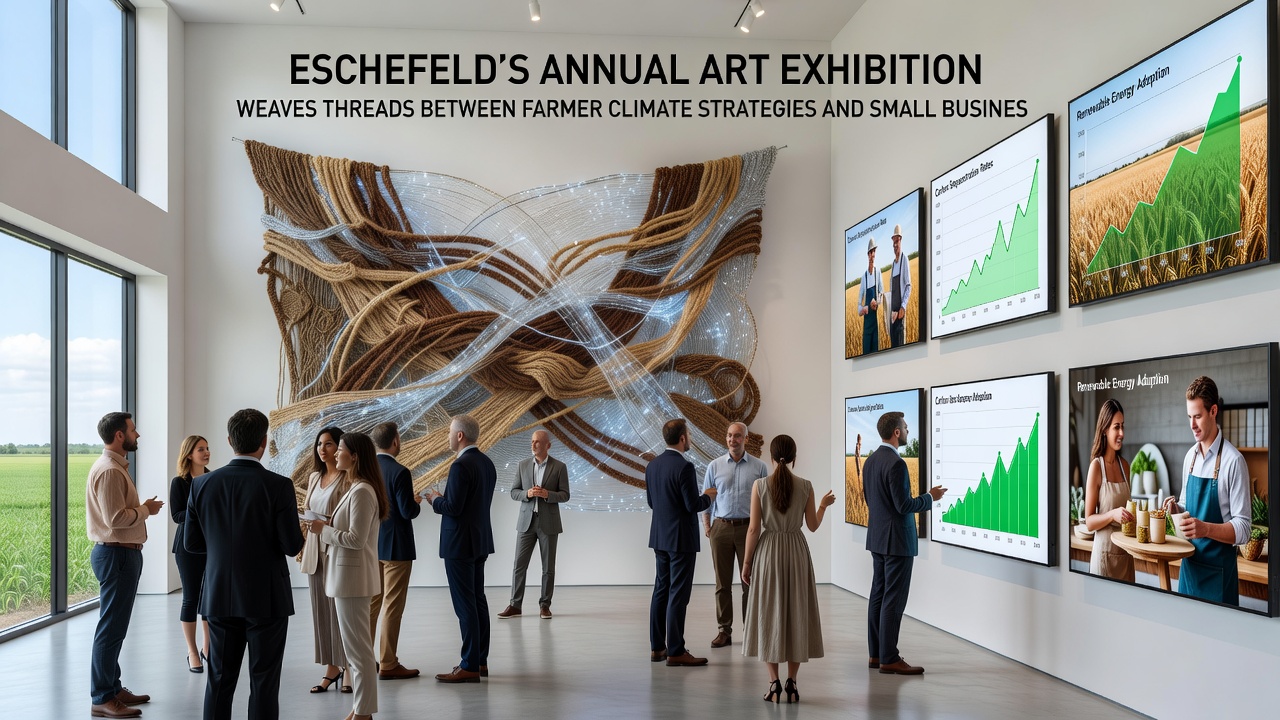
One installation features a series of woven tapestries whose patterns encode yield data from farms that adopted drought-resistant crop varieties between 2020 and 2024. Another section presents case examples of bakeries and hardware stores that adjusted inventory and marketing after partnering with nearby producers on climate-smart sourcing agreements. These displays remain open daily from 10 a.m. to 6 p.m. during the run, with guided tours offered on weekends.
Farmer Climate Strategies Featured
Farmers in the surrounding Saxony district have implemented rotational grazing systems and precision nutrient application to reduce emissions while maintaining output. Research published by the German Federal Ministry of Food and Agriculture shows that such methods lowered average fertilizer use by 18 percent across participating holdings in 2023. Exhibition pieces translate these numbers into visual form, allowing viewers to trace connections between field-level decisions and broader landscape changes.
Panels within the main gallery display timelines of cooperative efforts where multiple farms share equipment for cover crop seeding, cutting individual costs while improving soil structure. Observers note that these collaborations often precede new small business formations, such as seed supply services or equipment maintenance shops serving the same network of producers.
Links to Small Business Growth Plans
Local retailers report that participation in the exhibition generates direct leads for products tied to sustainable agriculture, including organic textiles and specialty foods. A 2024 survey conducted by the Leipzig Chamber of Commerce found that 27 percent of rural businesses in the district expanded their supplier lists after attending similar regional events the previous year. Several Eschefeld shops now stock goods from farms featured in the show and promote them through joint marketing campaigns.
Workshops held during the exhibition teach participants how to integrate climate data into business forecasts, covering topics such as insurance adjustments for weather-related losses and digital tools for tracking customer preferences around eco-labeled items. Attendance at these sessions reached 310 individuals in 2025, with organizers projecting similar numbers for the upcoming cycle.
Community Participation and Logistics
Artists selected for 2026 include three residents who operate both farms and galleries, plus two external contributors from neighboring districts whose projects focus on cross-sector supply chains. Submissions undergo review by a panel that includes representatives from the local agricultural cooperative and the chamber of commerce. Funding comes from municipal grants supplemented by private donations, with total budgets reported at approximately 48,000 euros for the 2025 edition.
Transportation arrangements include shuttle services from the regional train station, while accessibility features such as ramps and audio guides accommodate diverse visitors. The event coincides with harvest season, allowing farmers to combine exhibition visits with market deliveries and thereby strengthening the practical overlap between the two themes.
Conclusion
Records from past exhibitions demonstrate measurable upticks in both climate practice adoption and business registrations within six months of each closing date. The 2026 program continues this pattern by presenting integrated narratives that treat agricultural adaptation and enterprise development as linked components of regional planning. Visitors encounter concrete examples drawn from ongoing operations rather than abstract projections, and the format encourages direct follow-up between attendees and the farmers or shop owners whose work appears on display.